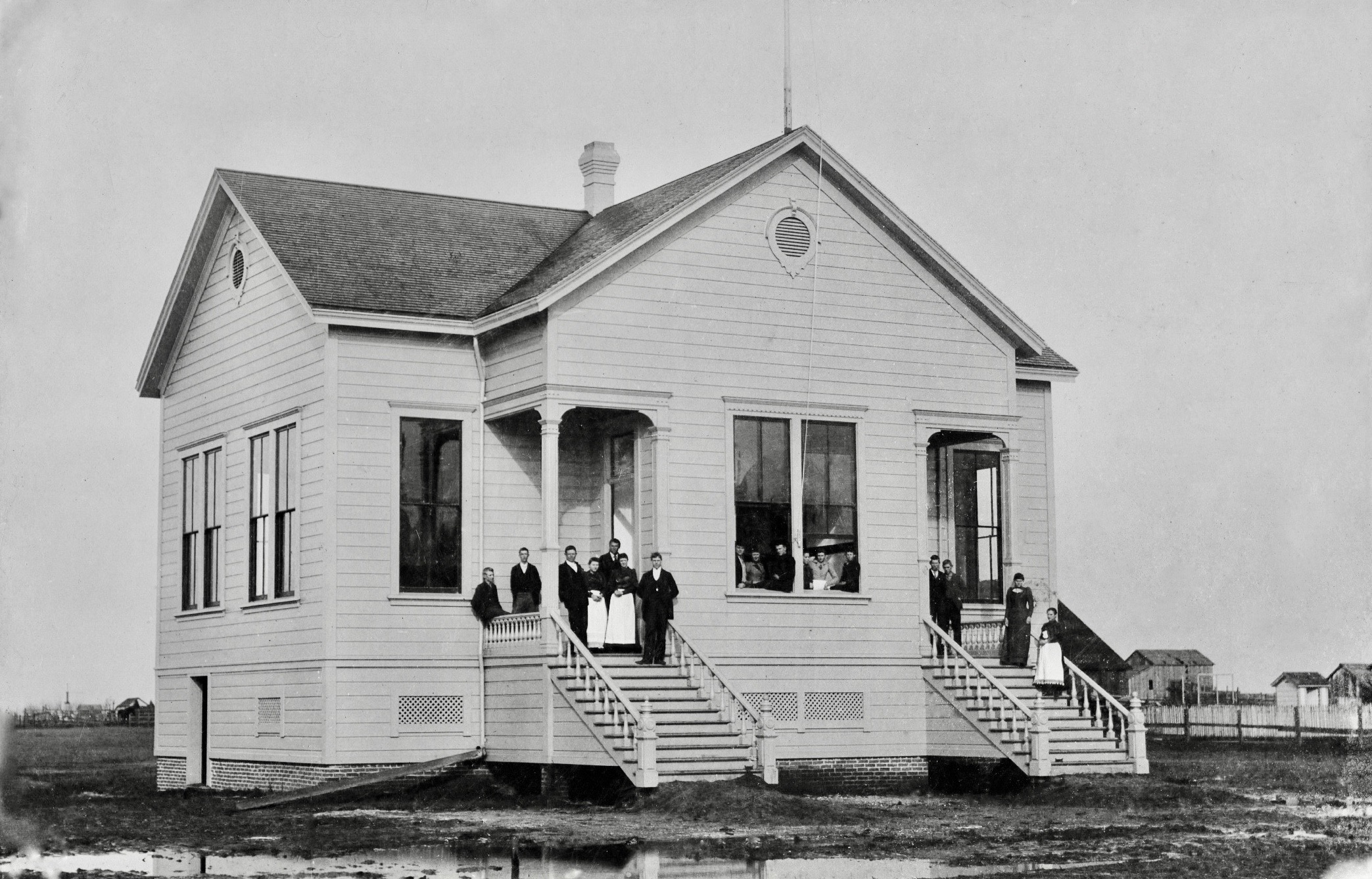
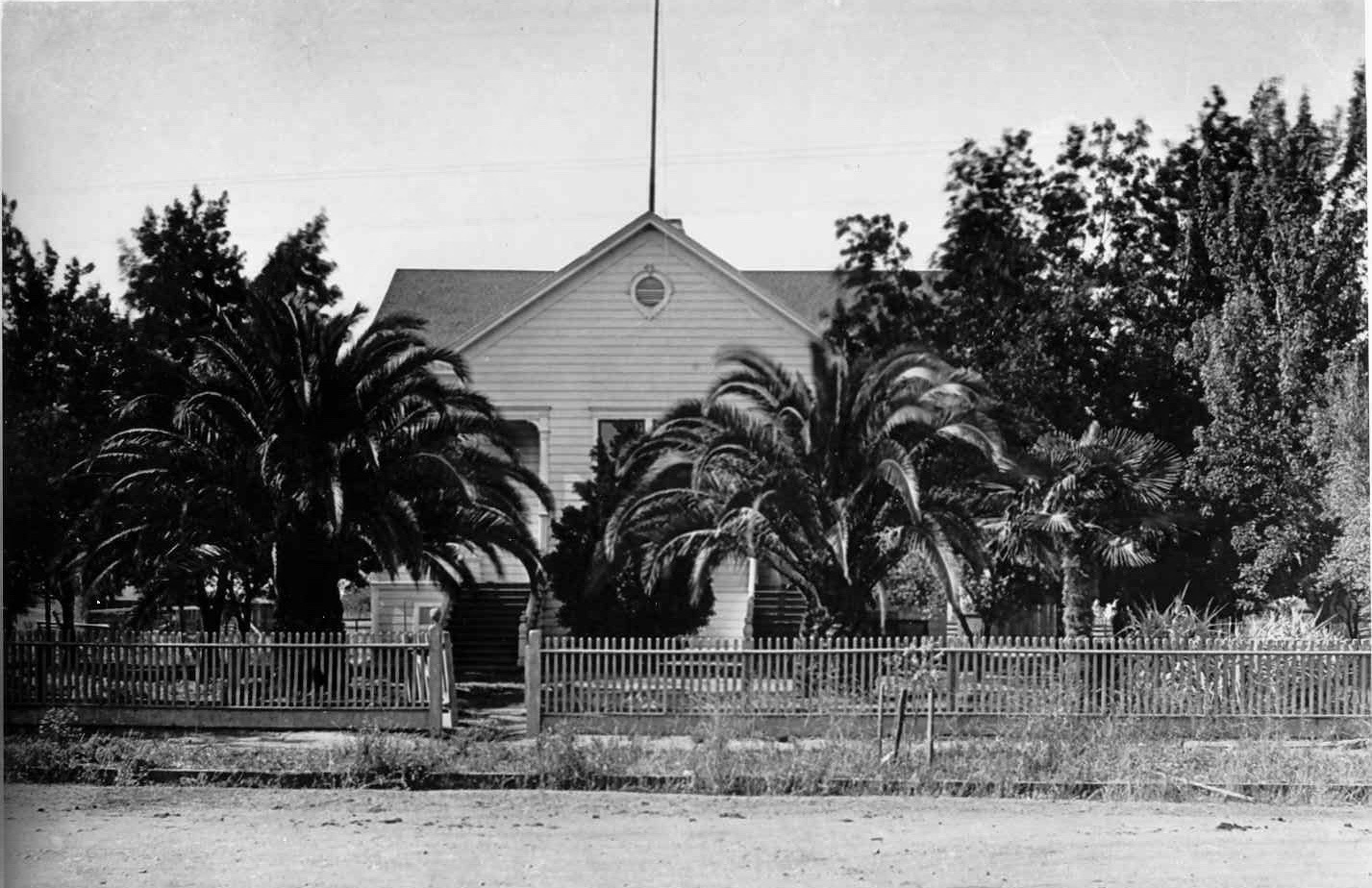
Elk Grove Union High School was the first union high school in the state of California. Sixteen elementary districts voted to tax themselves for a high school, and they all remained as separate districts until the entire K-12 district unified in 1959. The high school opened its doors in 1893 at its first site on Main Street (now Derr Street and Elk Grove Boulevard in Old Town – down the street from present day Herburger Funeral home).
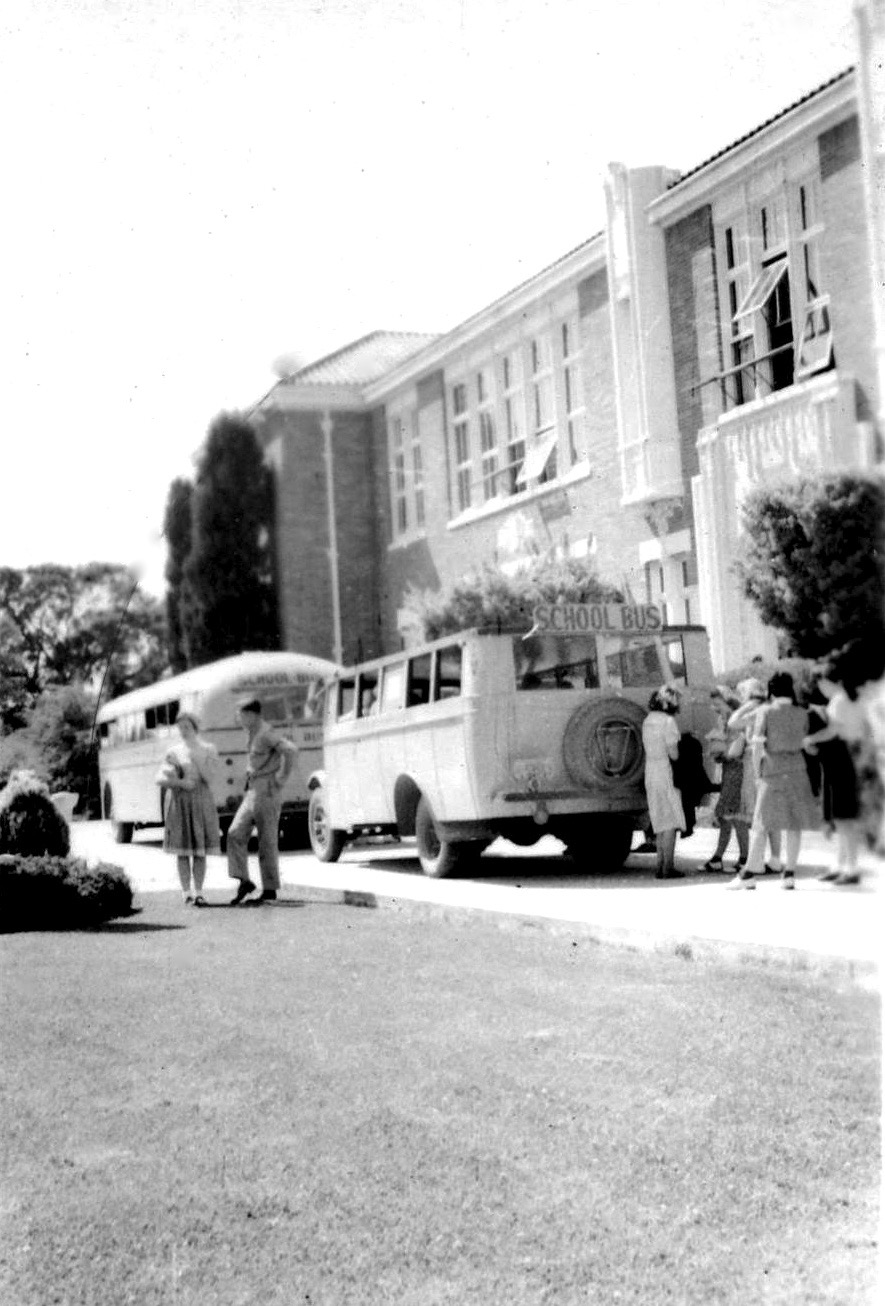
In 1922 a new brick building was constructed where the Joseph Kerr campus is today.
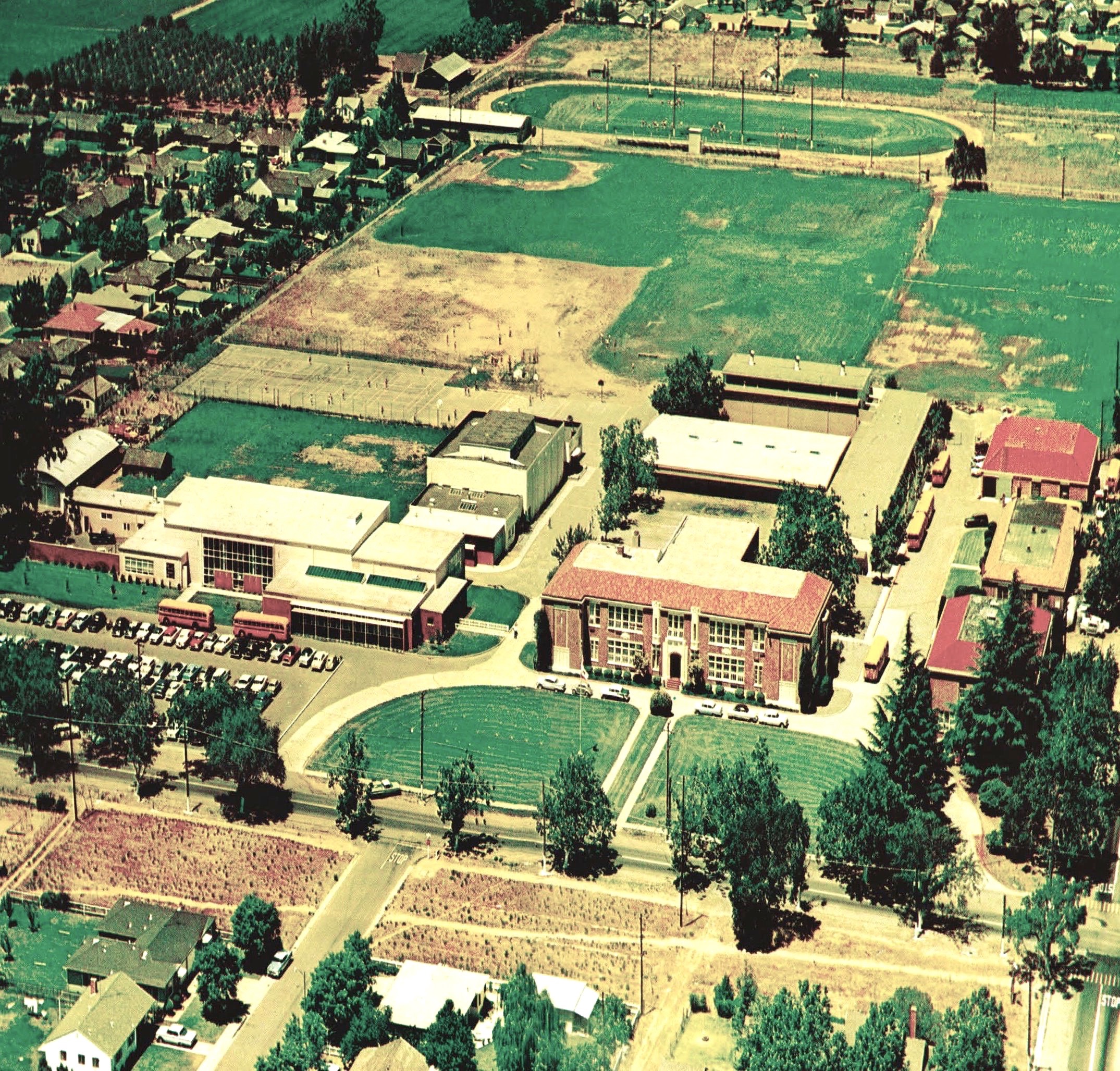
In 1964 the school moved to its present site as a three year high school (senior high) with grades 7-9 at the junior high.
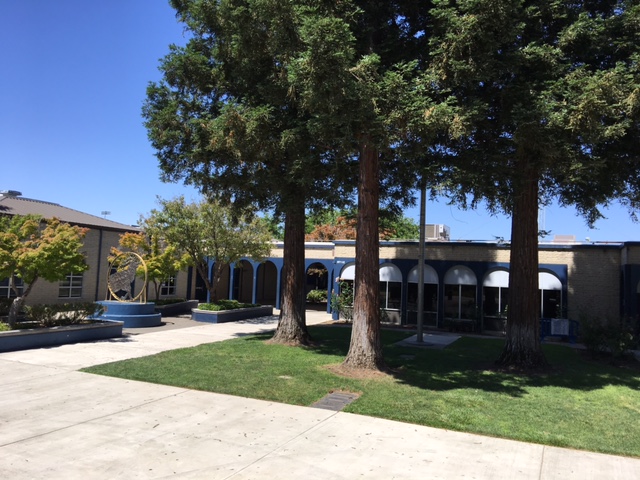
Elk Grove is the second oldest high school in Sacramento County, and until 1977 when Valley High School was built, Elk Grove was the only comprehensive high school in the district.
Here is the history of how a small farming community was forward thinking and was able to establish a rural high school.
History
Wikipedia says, presently (2018), there are more than 37,100 HS’s in the USA (26,407 public and 10,693 private) Most are in California, Texas, Illinois, Ohio, and New York.
The very first high school in the United States was Boston Latin HS (Massachusetts) “Wolfpack” in 1635.
The very first high school built west of the Mississippi was the Tipton HS (Iowa) “Tigers” in 1856. A few months later the second high school was built, the Sacramento HS (California) “Dragons.” Elk Grove was the second public high school built in Sacramento County in 1893 and it was an amazing story.
Elizabeth Pinkerton, our Elk Grove historian has written several history books about Elk Grove. In Book-2 of History Happened Here – Fields, Farms, Schools she explains in detail the story of the conception, construction, and historic beginnings of the high school. There isn’t a more better or comprehensive study of the school than hers anywhere.
As a basis and for a better understanding of the high school, she graciously allowed me to reprint parts of chapter 13 on the Elk Grove High School. Here is her text…
“When the first young men and women began their high school education in Elk Grove in 1893, there were only 13 of them on the first day, but before long, they reached the enrollment goal of 20.”
“Until that year there had only been one high school in the entire Sacramento County and surrounding area, Sacramento High School. Serious students, who wanted to continue their education beyond one-room schools that most of them attended, had to live with friends or relatives in cities where there was a high school. Imagine having to move to Sacramento, San Jose, or San Francisco in order to go to high school.”
“We owe our fine tradition of high school education to a handful of men and women who banded together to form a high school district. They were the first residents of a rural area in the State of California to do so, giving Elk Grove the distinction of having been the first union high school district in the state!
In the 1890s Elk Grove and Florin were the two largest towns in the south Sacramento County area. Franklin, Bruceville, and Union House were little crossroad communities west of what is now Highway 99. Sloughhouse was where it still is today. Sheldon, located on the boundary of the Sheldon Grant, was a town dying a slow death. There was not the demand for wagons that were made there as there had been during the gold days. With the advent of the railroad, shipping was being done by rail, so wagons were not needed as much.
Little one-room country schools dotted the countryside across south Sacramento County. They provided a system of social organization for the area’s farming and ranching families. There were 18 little districts scattered around the townships. Thus it was in 1891 when the California legislature passed a law allowing two or more elementary districts to form a union high school district and establish a quality education for young people. It is claimed that it was Mrs. Delos Gage who noticed the article in the newspaper. She clipped it out and took it to Dr. James McKee, Elk Grove’s well-loved and greatly respected horse and buggy doctor. Little did the good doctor know that his next steps would result in a continually growing high school system that would serve thousands of students in the future. The big concerns at the time were getting the agreement of enough people to establish a high school district, finding an appropriate location in which to build it, and then, the most important part of all, finding 20 students who would enroll in the new high school.
Feeling that through this act Elk Grove might solve its education problem, Dr. McKee secured the commitment of several community leaders who then worked to arouse interest in the project. They had made a good start toward the high school goal when the terrible 1892 fire destroyed most of the town of Elk Grove. Also lost were all the papers that had been developed for the new project. This delayed matters, as you might imagine, because everyone in town was affected in some way. [i]
Dr. McKee found support among a group of Elk Grove businessmen who later, counting the doctor, were referred to as the Big Six. They were Joseph Hasman, Alfred Coffman, Julius Everson, James Chinnick, and Joseph Kerr, all leading citizens of the new town of Elk Grove. Among the others who assisted was Samuel Kennedy of the Gerber Road and Florin area. Their task was to convince the residents of the value of a high school education for their young people. Dr. McKee’s idea was to use all the elementary districts to form the high school. According to the law, if the majority of the heads of households voted to do so, they could start a high school district and build their own school.[ii]
In the early spring of 1893 a meeting was held in the old Toronto Hall (in today’s Old Town) to discuss the establishment of a union high school. The group agreed to utilize the services of Alfred Coffman, a trustee of Old Elk Grove School District, for this purpose. Mr. Coffman drove through 18 elementary school districts to talk to families about the high school project. He carried with him a petition that he hoped to have signed by every family head so they could declare their support for the high school – or their opposition.
It was no easy task to start a high school district. Not everyone shared the vision that young folks should attend school beyond the elementary grades. There was work to be done on the farm, and some believed that boys and girls would be wasting their time in school. There were many who were against the project; some believed that they could never get even ten students for the school, and others were very much opposed to additional taxes they knew they would have to pay. As great a problem to unification as open hostility and antagonism, was indifference. Many people did not care and didn’t plan to vote anyway.
When the election was held in each district and the votes counted, 16 of the 18 districts voted to become part of the union high school district. The new school would become a reality. What a tribute to the perseverance and persuasiveness of the Big Six!
The next step for the planners was to decide on a location, but this also turned out to be controversial. Some wanted the school near their community, and others thoughts were more like not in my backyard. They had another meeting at the Toronto Hall, and at this one, every one of the 16 little elementary districts was represented. Mr. B. F. Howard, the Sacramento County Superintendent of Schools acted as the chairman, and the various suggestions for the high school location were considered. The gentleman from the town of Franklin offered Franklin Hall, the building that had been planned as an academy in the middle of the town of Franklin. Thomas Mc Connell of San Joaquin District offered a piece of land at McConnell’s Station, near the Cosumnes River.
Then, so the story goes, Dr. McKee rose and handed the Mr. Howard an envelope. Inside was a deed to land on Elk Grove’s main street donated by Joseph Kerr. This came as a huge surprise to those gathered, but Mr. Kerr was ahead of everyone else’s thinking. There would be no negotiation over price or place now – for his donation had no strings attached. This was what one could expect from this public spirited citizen who was always ready to contribute to the welfare of the town.[iii]
Joseph Kerr’s generous gift decided the question of location, and the new high school had its site in the middle of town. The majority voted to accept the gift, and imagine this – anvils were fired in the street to announce the result. Everyone for miles around knew that Elk Grove would have the high school.
The new Joint Union High School District had at first 16 trustees as the act under which it was formed provided that the clerk of the board of each grammar school district act as trustee on the Joint High School Board. This was eventually found to be unsatisfactory, and the number of trustees was later reduced to five.
Work began that fall of 1893 on the school building with an anticipated cost of $1,800. Enough students had to be found to meet the legal requirement of 20 to operate the school. A teacher had to be hired who would also serve as principal, the curriculum had to be developed, and there were textbooks and furniture to be purchased. Most of all, the interest level had to be kept up so that the school could become a reality.
The building, however, was not completed until December. The high school classes actually began in November though – in the building adjoining the grounds that belonged to the Women’s Christian Temperance Union (WCTU). The trustees hired Mr. R. T. McKissick, who had just graduated that spring from the University of California. He job was to serve as both principal and teacher of the 20 students expected at the new school. This was the minimum enrollment required by law for the operation of a high school! Without an enrollment of 20, the school would have to close.
The Sacramento Record- Union Tuesday morning, November 7, 1893[iv]
Elk Grove High School – It Opens Under the Most Favorable Auspices
“The Union High School at Elk Grove is an accomplished fact and has made a most encouraging start justifying the expectations of those who labored so hard and faithfully to establish it. The trustees were fortunate in securing the services as teacher of R. T. McKissick, a graduate of the University and an A. B. who comes to them with the highest recommendation, both of educational and pedagogical qualification. The school opened Monday morning with thirteen pupils and with good prospects of a large increase in the near future.”
The dream came through for those who had worked to make the education promise of the high school a reality. Forever we must cherish the accomplishments of the six who made it happen: Dr. McKee, Joseph Kerr, Julius Everson, Joseph Hasman, James Chinnick, and Alfred Coffman. Five of these men never attended school beyond the elementary grades, and two of them were born in other countries. But through their efforts the first Joint Union High School in the state of California was established in Elk Grove.
No wonder we honor this man who found the time in his busy life of caring for the ills of the community to be the moving spirit in such a worthwhile movement.
Elk Grove Union High School, created in September of 1893, was the second high school in Sacramento County, and it was the first union high schoolin California. This was an exciting moment for the communities of Elk Grove, Florin, Sloughhouse, Sheldon and Franklin. For the first time young people who wished to continue their education beyond the 10th grade at the country schools could live at home and go to high school. Their days of boarding with friends or relatives in cities that had high schools were over!
The new school was built at the corner of Main Street and what is now Derr Street. In December of 1893 the school was completed, and the students and their teacher/principal, Robertson McKissick, moved in. The students, their parents and the entire community prepared for the great dedication that was held in January of 1894. It was decided to hold the event in the I.O.O.F. Hall just down the street – that’s the building that still stands there.